The Ande Laboratory

Satyanarayana Ande, PhD
Associate Professor, Biochemistry & Molecular Biology
Member, Molecular Oncology & Biomarkers Program
Georgia Cancer Center at Augusta University
Jump to: Research SummaryImpact on Georgia patientsResearch Focus Research Interests Publications
Contact Us
The Satyanarayana Ande Lab
Health Sciences Campus
GCC - M. Bert Storey Research Building
1410 Laney Walker Blvd., CN-3144A
Office: (706) 723-0029
Lab: (706) 721 4124
Research Summary
My laboratory research is mainly focused on liver cancer (hepatocellular carcinoma, HCC) and obesity-associated liver disease. We are specifically interested in identifying novel cytokines and transcription factors and investigating their specific function in the liver and adipose tissues and their potential involvement in the initiation and progression of liver cancer and obesity-associated fatty liver disease, using knockout and transgenic mouse models.

Impact on Patients in Georgia
Dr. Ande is investigating the molecular roots of liver cancer arising from obesity-related fatty liver disease—a pathway of growing concern in Georgia, where rates of obesity and metabolic syndrome are among the highest in the nation.
By identifying two key proteins—ID1 and NQO1—that promote the progression from fatty liver to full-blown hepatocellular carcinoma, his research is laying the groundwork for new diagnostic markers that could catch this cancer earlier, when it is still treatable.
His focus on the proteins that drive abnormal fat metabolism in the liver gives researchers and clinicians a specific molecular target to intercept before irreversible liver damage occurs.
Research Focus
- Hepatocellular carcinoma initiation and progression and cancer cell metabolism
- Obesity associated fatty liver disease and liver cancer
Research Interests
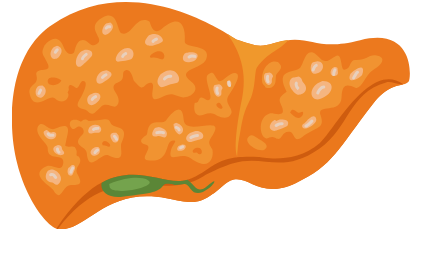
Non-alcoholic Fatty liver disease (NAFLD) characterized by accumulation of excessive fat in the liver is a global epidemic. NAFLD often progresses into a more severe form of steatohepatitis which can further advance into severe fibrosis, inflammation, and liver cancer. NAFLD occurs when there is increased hepatic free fatty acid (FFA) uptake and triglyceride synthesis, and increased hepatic de novo lipid synthesis from glucose (lipogenesis). Currently, there are no medical treatments available for NAFLD. Identifying proteins/enzymes that promote hepatic FFA uptake and hepatic de novo lipogenesis can lead to the development of novel therapeutic strategies to treat NAFLD. Id1 (Inhibitor of differentiation 1) is a helix-loop-helix transcription factor. Based on our initial studies, our hypothesis is that Id1 promotes hepatic FFA uptake and hepatic de novo lipogenesis, and thus, liver-specific targeting of Id1 suppresses fatty liver disease and fatty liver-associated liver tumorigenesis. Therefore, the major goal of this project is to investigate the specific function of Id1 in the initiation and progression of fatty liver disease and fatty liver-associated liver tumorigenesis.
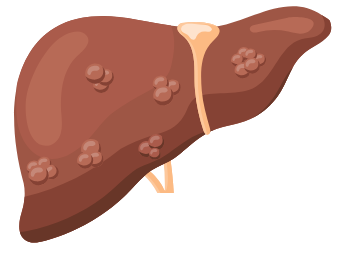
Hepatocellular carcinoma (HCC) is the most common type of primary liver cancer, which is one of the leading causes of cancer deaths worldwide. HCC is highly resistant to conventional chemotherapies, thus emphasizing the indispensable need to discover specific molecular targets for the treatment of HCC. Using RNA-Sequencing, we detected strong upregulation of Nqo1 in DEN-induced mouse liver tumors. Most remarkably, we discovered strong inhibition of chemical-induced HCC in Nqo1 knockout mice compared to Nqo1+/+ mice, suggesting that lack of Nqo1 inhibits HCC growth. At the molecular level, Nqo1 ablation blocked activation of both the PI3K/Akt and MAPK/ERK signaling pathways. Based on these findings, our hypothesis is that Nqo1 functions as an upstream activator of both the PI3K/Akt and MAPK/ERK signaling pathways, and that Nqo1 ablation inhibits HCC cell proliferation and tumor growth; hence, Nqo1 functions as an ideal therapeutic target to inhibit HCC. Therefore, the major goal of this project is: 1. to investigate if Nqo1 is required for HCC cell proliferation and tumor growth, 2. investigate the mechanisms by which Nqo1 ablation inhibits liver cancer cell proliferation and tumor growth and 3. determine the impact of Nqo1 ablation from established liver tumors for therapeutic exploitation.
View Pure Research Profile
| Publication |
|---|
Correction to: The cellular level of telomere dysfunction determines induction of senescence or apoptosis in vivo(EMBO reports, (2005), 6, 3, (275-281), 10.1038/sj.embor.7400352)Lechel, A., Ande, S., Ju, Z., Plentz, R. R., Schaetzlein, S., Rudolph, C., Wilkens, L., Wiemann, S. U., Saretzki, G., Malek, N. P., Manns, M. P., Buer, J. & Rudolph, K. L., Aug 9 2024, In: EMBO Reports. 25, 8, p. 3738 1 p.Research output: Contribution to journal › Comment/debate › peer-review |
Nrf2 Drives Hepatocellular Carcinoma Progression through Acetyl-CoA-Mediated Metabolic and Epigenetic Regulatory NetworksXi, C., Pang, J., Barrett, A., Horuzsko, A., Ande, S., Mivechi, N. F. & Zhu, X., Oct 1 2023, In: Molecular Cancer Research. 21, 10, p. 1079-1092 14 p.Research output: Contribution to journal › Article › peer-review |
The Transcription Factor RXRa in CD11c+ APCs Regulates Intestinal Immune Homeostasis and InflammationManoharan, I., Shanmugam, A., Ramalingam, M., Patel, N., Thangaraju, M., Ande, S., Pacholczyk, R., Prasad, P. D. & Manicassamy, S., Sep 20 2023, In: Journal of Immunology. 211, 5, p. 853-861 9 p.Research output: Contribution to journal › Article › peer-review |
Molecular signaling pathways and therapeutic targets in hepatocellular carcinomaDimri, M. & Satyanarayana, A., Feb 2020, In: Cancers. 12, 2, 491.Research output: Contribution to journal › Review article › peer-review |
The tumor secretory factor ZAG promotes white adipose tissue browning and energy wastingElattar, S., Dimri, M. & Satyanarayana, A., Sep 2018, In: FASEB Journal. 32, 9, p. 4727-4743 17 p.Research output: Contribution to journal › Article › peer-review |
Id1 promotes obesity by suppressing brown adipose thermogenesis and white adipose browningPatil, M., Sharma, B. K., Elattar, S., Chang, J., Kapil, S., Yuan, J. & Satyanarayana, A., Jun 1 2017, In: Diabetes. 66, 6, p. 1611-1625 15 p.Research output: Contribution to journal › Article › peer-review |
Speedy A-Cdk2 binding mediates initial telomere-nuclear envelope attachment during meiotic prophase i independent of Cdk2 activationTu, Z., Bayazit, M. B., Liu, H., Zhang, J., Busayavalasa, K., Risal, S., Shao, J., Satyanarayana, A., Coppola, V., Tessarollo, L., Singh, M., Zheng, C., Han, C., Chen, Z., Kaldis, P., Gustafsson, J. Å. & Liu, K., Jan 17 2017, In: Proceedings of the National Academy of Sciences of the United States of America. 114, 3, p. 592-597 6 p.Research output: Contribution to journal › Article › peer-review |
The cell polarity protein Scrib functions as a tumor suppressor in liver cancerKapil, S., Sharma, B. K., Patil, M., Elattar, S., Yuan, J., Hou, S. X., Kolhe, R. B. & Ande, S., 2017, In: Oncotarget. 8, 16, p. 26515-26531 17 p.Research output: Contribution to journal › Article › peer-review |
Brown adipose tissue and the genetics of obesityAnde, S., Mar 1 2016, In: Heart and Metabolism. 69, p. 4-8 5 p.Research output: Contribution to journal › Article › peer-review |
Inhibitor of differentiation 1 transcription factor promotes metabolic reprogramming in hepatocellular carcinoma cellsSharma, B. K., Kolhe, R., Black, S. M., Keller, J. R., Mivechi, N. F. & Satyanarayana, A., 2016, In: FASEB Journal. 30, 1, p. 262-275 14 p.Research output: Contribution to journal › Article › peer-review |
Can Brown Fat Win the Battle Against White Fat?Elattar, S. & Satyanarayana, A., Oct 1 2015, In: Journal of Cellular Physiology. 230, 10, p. 2311-2317 7 p.Research output: Contribution to journal › Article › peer-review |
Negative Regulators of Brown Adipose Tissue (BAT)-Mediated ThermogenesisSharma, B. K., Patil, M. & Ande, S., Dec 2014, In: Journal of Cellular Physiology. 229, 12, p. 1901-1907 7 p.Research output: Contribution to journal › Review article › peer-review |
Id transcriptional regulators in adipogenesis and adipose tissue metabolismPatil, M., Sharma, B. K. & Ande, S., Jun 1 2014, In: Frontiers in Bioscience - Landmark. 19, 8, p. 1386-1397 12 p.Research output: Contribution to journal › Article › peer-review |
Ablation of the transcriptional regulator Id1 enhances energy expenditure, increases insulin sensitivity, and protects against age and diet induced insulin resistance, and hepatosteatosisSatyanarayana, A., Klarmann, K. D., Gavrilova, O. & Keller, J. R., Jan 2012, In: FASEB Journal. 26, 1, p. 309-323 15 p.Research output: Contribution to journal › Article › peer-review |
The promoter of human telomerase reverse transcriptase is activated during liver regeneration and hepatocyte proliferationSirma, H., Kumar, M., Meena, J. K., Witt, B., Weise, J. M., Lechel, A., Ande, S., Sakk, V., Guguenguillouzo, C., Zender, L., Rudolph, K. & Gnes, C., Jul 2011, In: Gastroenterology. 141, 1, p. 326-337.e3Research output: Contribution to journal › Article › peer-review |
RapGEF2 is essential for embryonic hematopoiesis but dispensable for adult hematopoiesisSatyanarayana, A., Gudmundsson, K. O., Chen, X., Coppola, V., Tessarollo, L., Keller, J. R. & Hou, S. X., Oct 21 2010, In: Blood. 116, 16, p. 2921-2931 11 p.Research output: Contribution to journal › Article › peer-review |
Mammalian cell-cycle regulation: Several cdks, numerous cyclins and diverse compensatory mechanismsSatyanarayana, A. & Kaldis, P., Aug 20 2009, In: Oncogene. 28, 33, p. 2925-2939 15 p.Research output: Contribution to journal › Review article › peer-review |
A dual role of Cdk2 in DNA damage responseSatyanarayana, A. & Kaldis, P., May 18 2009, In: Cell Division. 4, 9.Research output: Contribution to journal › Review article › peer-review |
Genetic substitution of Cdk1 by Cdk2 leads to embryonic lethality and loss of meiotic function of Cdk2Satyanarayana, A., Berthet, C., Lopez-Molina, J., Coppola, V., Tessarollo, L. & Kaldis, P., 2008, In: Development (Cambridge). 135, 20, p. 3389-3400 12 p.Research output: Contribution to journal › Article › peer-review |
p21 inhibits Cdk1 in the absence of Cdk2 to maintain the G1/S phase DNA damage checkpointSatyanarayana, A., Hilton, M. B. & Kaldis, P., Jan 2008, In: Molecular Biology of the Cell. 19, 1, p. 65-77 13 p.Research output: Contribution to journal › Article › peer-review |
The cellular level of telomere dysfunction determines induction of senescence or apoptosis in vivoLechel, A., Satyanarayana, A., Ju, Z., Plentz, R. R., Schaetzlein, S., Rudolph, C., Wilkens, L., Wiemann, S. U., Saretzki, G., Malek, N. P., Manns, M. P., Buer, J. & Rudolph, K. L., Mar 2005, In: EMBO Reports. 6, 3, p. 275-281 7 p.Research output: Contribution to journal › Article › peer-review |
Contrasting effects of telomere shortening on organ homeostasis, tumor suppression, and survival during chronic liver damageWiemann, S. U., Satyanarayana, A., Buer, J., Kamino, K., Manns, M. P. & Rudolph, K. L., Feb 24 2005, In: Oncogene. 24, 9, p. 1501-1509 9 p.Research output: Contribution to journal › Article › peer-review |
p16 and ARF: Activation of teenage proteins in old ageSatyanarayana, A. & Rudolph, K. L., Nov 2004, In: Journal of Clinical Investigation. 114, 9, p. 1237-1240 4 p.Research output: Contribution to journal › Review article › peer-review |
p16 and ARF: activation of teenage proteins in old age.Ande, S. & Rudolph, K. L., Nov 1 2004, In: The Journal of clinical investigation. 114, 9, p. 1237-1240 4 p.Research output: Contribution to journal › Comment/debate › peer-review |
Gene expression profile at the G1/S transition of liver regeneration after partial hepatectomy in miceSatyanarayana, A., Geffers, R., Manns, M. P., Buer, J. & Rudolph, K. L., Nov 2004, In: Cell Cycle. 3, 11, p. 1405-1417 13 p.Research output: Contribution to journal › Article › peer-review |
Telomeres, telomerase and cancer: An endless search to target the endsSalyanarayana, A., Manns, M. P. & Rudolph, K. L., Sep 2004, In: Cell Cycle. 3, 9, p. 1138-1150 13 p.Research output: Contribution to journal › Review article › peer-review |
Telomeres and telomerase: A dual role in hepatocarcinogenesisSatyanarayana, A., Manns, M. P. & Rudolph, K. L., Aug 2004, In: Hepatology. 40, 2, p. 276-283 8 p.Research output: Contribution to journal › Review article › peer-review |
Mitogen stimulation cooperates with telomere shortening to activate DNA damage responses and senescence signalingSatyanarayana, A., Greenberg, R. A., Schaetzlein, S., Buer, J., Masutomi, K., Hahn, W. C., Zimmermann, S., Martens, U., Manns, M. P. & Rudolph, K. L., Jun 2004, In: Molecular and Cellular Biology. 24, 12, p. 5459-5474 16 p.Research output: Contribution to journal › Article › peer-review |
Telomere shortening impairs organ regeneration by inhibiting cell cycle re-entry of a subpopulation of cellsSatyanarayana, A., Wiemann, S. U., Buer, J., Lauber, J., Dittmar, K. E. J., Wüstefeld, T., Blasco, M. A., Manns, M. P. & Rudolph, K. L., Aug 1 2003, In: EMBO Journal. 22, 15, p. 4003-4013 11 p.Research output: Contribution to journal › Article › peer-review |
Hepatocyte telomere shortening and senescence are general markers of human liver cirrhosisWiemann, S. U., Ande, S., Tsahuridu, M., Tillmann, H. L., Zender, L., Klempnauer, J., Flemming, P., Franco, S., Blasco, M. A., Manns, M. P. & Lenhard Rudolph, K., 2002, In: FASEB Journal. 16, 9, p. 935-942 8 p.Research output: Contribution to journal › Article › peer-review |