
MCG’s Federally Qualified Health Center & Community Health Center Educational Partners
The Medical College of Georgia has formal collaborative educational affiliations with community health centers that include a statewide group of Federally Qualified Health Centers (FQHCs) and local community-based Community Health Centers (CHCs). These affiliations support student learning opportunities (experiences) in settings providing interdisciplinary, comprehensive, and patient centered primary care services to rural, medically underserved, and other medically vulnerable populations and communities. These health centers have governing Boards of Directors consisting of patients and other community members (consumers) and as such are community-based, and patient directed and expand healthcare access to patients in more locations regardless of insurance or financial status.
The clinical practices of these FQHCs and other CHCs are usually located in and/or serve health professions shortage areas (HPSAs) or medically underserved areas/populations (MUAs/P). These practices have appropriate patient volumes, demographics, and diagnostic frequencies, along with physician providers serving as MCG clinical faculty members, to support student clinical immersions, clerkships, electives, and practice-based research.
FAQsClinical Experience Student Experience City & County & MapCareer Exploration
MCG Graduates Practice in an FQHC | Dr. Dave Ringer
Dr. David Ringer describes how attending MCG and the support he received inspired him to become a small-town doctor.
FQHC/CHC Clinical & Educational Platforms | Dr. Joseph Hobbs
Dr. Joseph Hobbs explains how FQHCs & CHCs are an important part of the nation’s healthcare delivery system especially in the state of Georgia.
MCG’s FQHC & CHC Educational Partners’ FAQs
-
These are non-profit Health Resources and Service Administration (HRSA) federally funded award recipient CHCs providing comprehensive primary care access to insured, underinsured, and uninsured individuals in medically underserved populations and communities. FQHCs whole community health care access and comprehensive services availability is made possible by qualifying for Public Health Service (PHS) funding through HRSA, enhanced federal health care insurance program reimbursements through a Prospective Payment System, patient payment for services using sliding scales, access to federal drug pricing discount programs, philanthropy, and other local and state programs and affiliations. FQHCs must have onsite or by consultation or affiliation patient access to other specialty, hospital, mental health, substance abuse, dentistry, preventive health, and transportation services. These centers also have continuous quality assessment and improvement programs and reporting requirements. Most MCG education affiliated FQHCs are recognized or certified as a Patient Centered Medical Home by the National Committee for Quality Assurance (NCQA), Accreditation Association for Ambulatory Health Centers (AAAHC) or other national agencies facilitating quality through formal assessments and improvement strategies.
FQHCs are National Health Service Corps (NHSC) approved sites, and their practicing physicians and other primary care providers are eligible for federal health professions education loan repayment and PHS Loan forgiveness programs as well and state loan repayment programs depending on locations (i.e., HPSAs) and/or populations (i.e., MUA/P) served.
-
FQHCs, by regulations, provide interdisciplinary and comprehensive primary care to entire communities and serve as safety net providers by mitigating financial, logistical, cultural, and linguistic barriers to health care access to address health disparities, and promote prevention and wellness. -
FQHCs provide comprehensive primary care to individuals and families which includes social services, behavioral health, pharmacy, substance abuse, health care outreach, laboratory, quality initiatives, and case management programs. Clinical outreach could also include school, employee, and farmworker (agricultural) health services and care in patients’ homes or long-term care living facilities. -
The current group of 20 MCG educationally affiliated FQHCs is a part of 35 such health centers in Georgia each with multiple distributed clinical sites providing health care services to communities in most of the state’s 159 counties. The service areas of the MCG FQHC partners, as of 6/2025, includes approximately 96, mostly rural, Georgia counties (one in Aiken County, South Carolina). Many of these educational partners have a history of prior MCG student engagement. As this network continues to mature, we hope to increase MCG’s educational partnerships with other Georgia FQHCs. -
Health care staffing in FQHCs could consist of physicians, nurses, nurse practitioners, physician assistants, pharmacists, dentists, social workers, behavioral health specialists, dietitians, and associated clinical and administrative support staff.
The clinical care is provided by an interprofessional team of providers coordinated by physician team members.
-
CHC is a broad category for all HRSA federally funded nonprofit health clinics (including FQHCs) and non-HRSA federally funded health centers. These health centers are committed to improving health care access for underserved medically vulnerable communities and populations by providing comprehensive primary care, prevention, wellness, and other health services to individuals and families regardless of financial or insurance status. Some of these CHCs that meet PHS eligibility requirements have access to federal discount drug pricing programs and enhanced federal insurance programs reimbursements but do not receive federal grant funding. These so-called “FQHC look-a-likes” have similar operational and reporting responsibilities as those described under “What are FQHCs”. Practicing physicians and other primary care providers in National Health Service Corps (NHSC) approved CHC’s sites in Health Professions Shortage Areas (HPSAs) and Medically Underserved Areas/Populations (MUA/P) are eligible for federal health professions education loan repayment and forgiveness programs as well and state loan repayment programs depending on locations and populations served. Other non-HRSA federally funded CHCs include free and charitable clinics and other clinics sponsored by community base health care organizations. Practicing physicians and other primary care providers in non-federally funded and non-profit qualifying CHCs may be eligible for federal and Georgia's state health professions education loan repayment and forgiveness programs depending on location (i.e., HPSAs) and/or populations (MUA/Ps) served.
The inaugural MCG educationally affiliated non- federally funded CHCs located in communities surrounding the MCG Augusta campus receives financial operating support from the private sector, philanthropy, patient fees, insurance reimbursements, volunteerism, state and local grants, and other community health and social service affiliations.
-
This whole community access for insured, underinsured, and uninsured individuals is facilitated through collaborative support from local health care organizations (in some instances, federal or state sources), philanthropy, and other community partners as well as commercial and patient payment for health care services. Patients of CHCs generally reside in zip codes and/or geographic areas challenged by health care access, socioeconomics, and health disparities. These other CHCs, like FQHCs, are an essential part of the health care system assisting those who lack or have limited access to health care services. -
The primary care clinical team of MCG’s CHC Educational Partners consists of Physicians, Nurse Practitioners and Physician Assistants. Along with the group of MCG educationally affiliated CHCs are numerous other-like health centers distributed throughout the state serving community health and health care needs. -
For student community health education experiences, the three CHCs serving populations surrounding MCG’s main campus in Augusta were identified to promote student community service and educational engagement. Each has a history of formal and informal educational engagements with MCG students. As this network continues to mature, we hope to increase MCG’s partnerships with other CHCs. -
The current MCG educationally affiliated CHCs provide comprehensive primary care services to individuals and families in communities surrounding the main campus in Augusta, and facilitate patient access to other community health, social and financial services to address healthcare needs.
What types of clinical experiences can students expect?
FQHC/CHC Student Educational Experiences | Dr. Ashley Saucier
Dr. Ashley Saucier explains how FQHCs & CHCs support the educational Mission of MCG and the healthcare needs of Georgians.
FQHC Clinical Teams | Dr. Dave Ringer
Dr. David Ringer discusses how his county has grown and stresses how the team approach to care in combination with other resources supports community health.
Medical students will have one-on-one interactions with primary care physicians and other interprofessional healthcare providers, allowing clinical encounters with a variety and large volume of patients and their families in a continuity care setting.
These health centers typically offer a wide range of interprofessional services in multiple locations distributed, for most, in their multi-county service areas, demonstrating effective team healthcare delivery.
Due to the rural and small-town location of many of these health centers, especially FQHCs, the scope of clinical services delivered may be greater than that seen in more populated areas because of the lack of other specialty care. These settings permit students to witness the scope of primary care and its associated urgent care services being practiced to its fullest extent.These clinical settings can support clerkship, elective, community service, population health research learning experiences.
FQHCs and CHCs along with physicians, other healthcare professionals, hospitals, public health and social agencies, and other health organizations who serve rural and underserved communities/populations help facilitate healthcare access to all Georgians.
MCG Student Experience at our FQHC/CHC sites
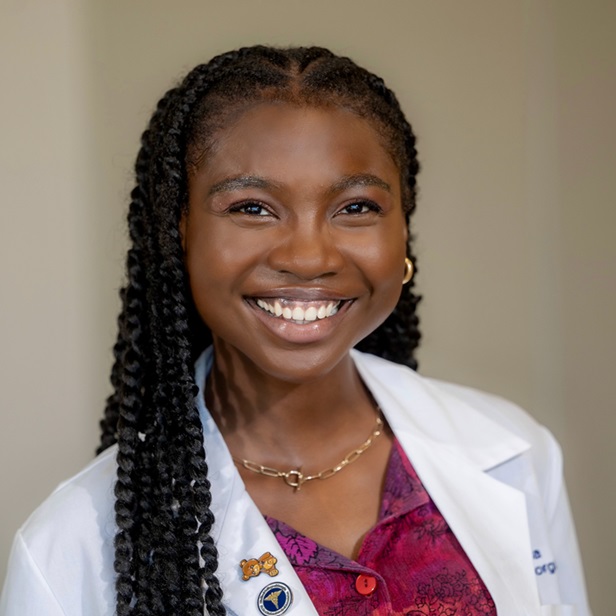
My experience rotating at East Georgia Health Care was incredibly enriching, both clinically and academically.
As a federally qualified health center, EGHC offered a unique opportunity to work closely with underserved populations while also contributing to systems-level improvements in care. I was fortunate to work alongside compassionate and knowledgeable providers, including Dr. Martin and his team, whose commitment to teaching created a supportive and engaging learning environment.
My clinical experience, particularly in managing patients with hypertension, aligned seamlessly with the research I was conducting on improving hypertension management at FQHCs. I was actively involved in patient care and had the chance to help implement a hypertension protocol aimed at improving outcomes.
EGHC was also intentional about supporting my interests in women's health, allowing me to work with a dedicated OBGYN provider as I prepare for a career in that field.
At the conclusion of my rotation, I presented my research findings to the EGHC team, and I look forward to sharing this work more broadly in the future.
My time at EGHC reaffirmed my passion for community-centered care and highlighted the vital role FQHCs play in advancing health equity.
MCG's FQHC & CHC Educational Partners'
Main Office, City & County Locations
Click the map's Stars or the Names & locations in the table for more information on our Educational Partners & Experiences offered to students
| Map # | Name/Type of Educational Partner | City/County |
| 17 | Albany Area Primary Health Care (FQHC) |
(Albany, Dougherty Co.) |
| 24 | Athens Neighborhood Center (FQHC) |
(Athens, Clarke Co.) |
| 1 | Christ Community Health Services (FQHC) |
(Augusta, Richmond Co.) |
| 18 | Coastal Community Health Services (FQHC) |
(McIntosh, Glynn Co.) |
| 2 | Community Healthcare Systems (FQHC) |
(Wrightsville, Johnson Co.) |
| 21 | Curtis V. Cooper Primary Health Care, Inc. (FQHC) |
(Savannah, Chatham Co.) |
| 20 | Diversity Health Center (FQHC) |
(Hinesville, Liberty Co.) |
| 4 | Druid Park Community Health Center (CHC) |
(Augusta, Richmond Co.) |
| 3 | East Georgia Healthcare Center (FQHC) |
(Swainsboro, Emanuel Co.) |
| 11 | Georgia Highlands Medical Services (FQHC) |
(Cumming, Forsyth Co.) |
| 12 | Georgia Mountains Healthcare (FQHC) |
(Blue Ridge, Fannin Co.) |
| 6 | Harrisburg Family Healthcare Clinic (CHC) |
(Augusta, Richmond Co.) |
| 22 | J.C. Lewis Primary Health Care Center (FQHC) |
(Savannah, Chatham Co.) |
| 7 | Lamar Medical Clinic (CHC) |
(Augusta, Richmond Co.) |
| 5 | Medical Associates Plus (FQHC) |
(Augusta, Richmond Co.) |
| 13 | McKinney Medical Center (FQHC) |
(Waycross, Ware Co.) |
| 9 | Oconee Valley Healthcare (FQHC) |
(Greensboro, Greene Co.) |
| 19 | Primary Care of Southwest Georgia (FQHC) |
(Bainbridge, Decatur Co.) |
| 15 | Primary Healthcare Centers (FQHC) |
(Trenton, Dade Co.) |
| 10 | Rural Health Services, Inc. (FQHC) |
(Aiken, Aiken Co., SC) |
| 16 | South Central Primary Care (FQHC) |
(Ocilla, Irwin Co.) |
| 23 | Valley Healthcare System (FQHC) |
(Columbus, Muscogee Co.) |
| 14 | YourTown Health (FQHC) |
(Palmetto, Fulton Co.) |