
Genomic Medicine Graduate Program Overview
The Need for Interdisciplinary Research
Why Genomic Medicine Matters
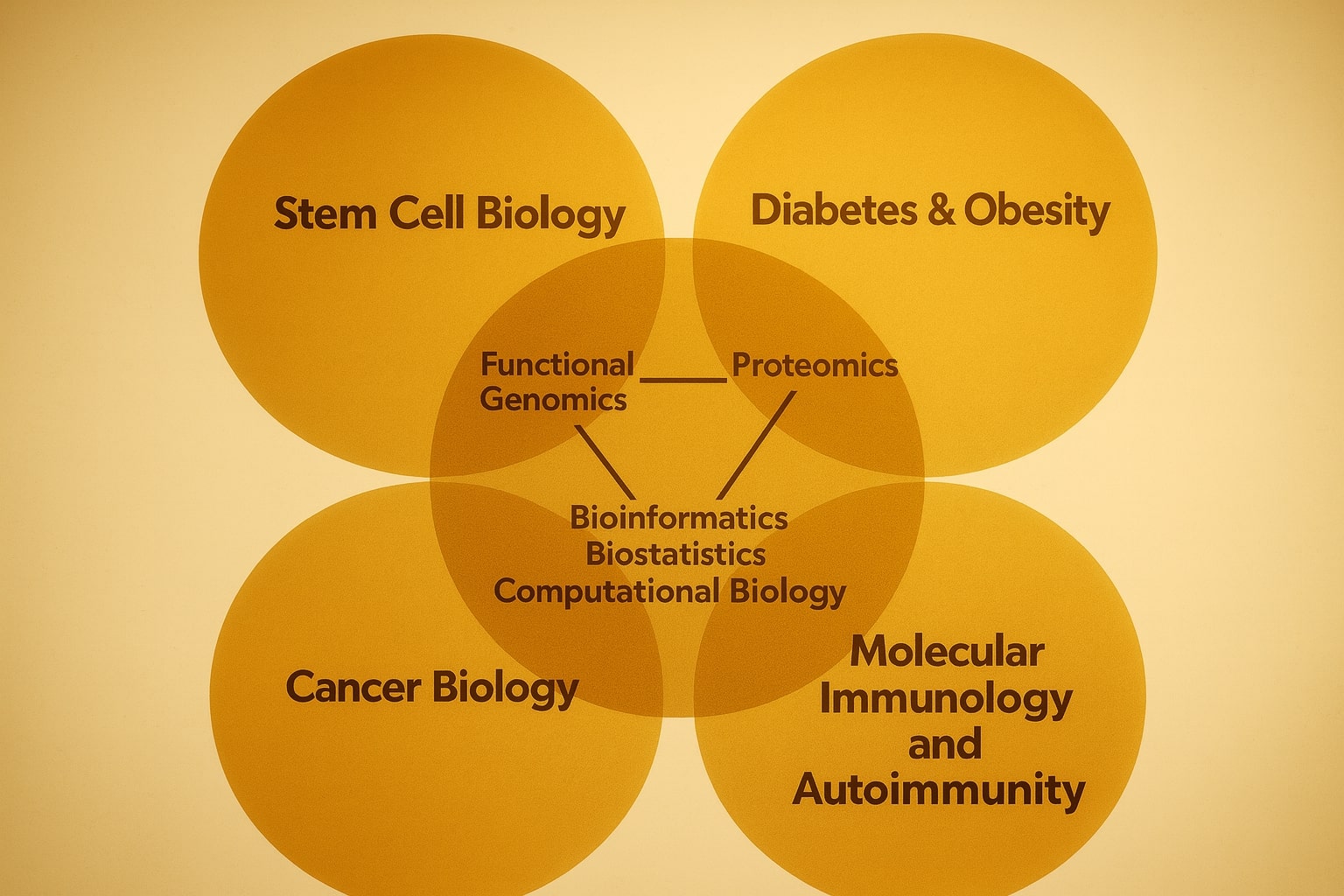
Traditional health related research has been organized by consolidating researchers into broad areas of scientific interest and then grouped into distinct departmentally based specialties. However, as science has progressed over the last decade, one theme has become apparent. Because of the complex dynamic process of biology, future scientific advancements in medicine need an interdisciplinary approach where scientists from different disciplines work together to solve biological problems. These interdisciplinary research programs integrate the analytical strengths of two or more scientific disciplines. By engaging “unrelated” disciplines, traditional gaps in terminology, approach, and methodology can be eliminated. This approach provides a bridge where the scope of investigation into biomedical problems is broadened and the research can yield new and unexpected insights. This concept has been crystallized at the national level and presented as the part of the NIH Roadmap for medical research in the 21st century. One of the barriers in these interdisciplinary research programs is each discipline has specific nomenclature and experimental methodologies that may be unfamiliar to investigators from other specialties.
About the Center for Biotechnology & Genomic Medicine
An Integrated Hub for Discovery
A high priority component of the Medical College of Georgia (MCG) strategic plan is growth of world-class research in genomics, genetics, proteomics, biotechnology and translational medicine. As part of this initiative, MCG created the Center for Biotechnology and Genomic Medicine (CBGM) to promote interdisciplinary research in translational medicine. Established in July of 2002, the CBGM has built a significant genomic and biotechnology presence with nationally recognized faculty and highly productive research laboratories. The interdisciplinary environment created at the Center integrates both technological and biological disciplines to provide an outstanding atmosphere for scientific exploration. These disciplines include genetics, genomics, proteomics, bioinformatics, biostatistics, computational biology, autoimmunity, stem cell biology, cancer biology, and molecular immunology. The figure to the left illustrates how the CBGM has positioned these disciplines to take advantage of this integrated environment. A common element among successful interdisciplinary research programs such as this is high quality graduate education. Future scientists trained to work within this integrated structure will have a significant advantage in both biomedical academia and in the commercial marketplace.
The Graduate Program
Graduate Program in Genomic Medicine
The Graduate Program in Genomic Medicine exploits an important strength of the CBGM, whose members readily cross the traditional boundaries between scientific disciplines. The unique aspect of a Graduate Program in Genomic Medicine at MCG is the application of genomic, proteomic and informatics technologies to understand and predict biological outcomes. To understand the complex nature of a biological problem, future researchers must be able to approach biomedical and clinical problems using integrated methodologies as well as develop critical thinking skills.
The Graduate Program in Genomic Medicine trains students at the interface of several disciplines to prepare them for the challenges of modern biology and medicine. The goal of the core curriculum is to provide a fundamental foundation in genetics, genomics, proteomics, statistics and computational biology. The students will use these technologies to address leading edge questions that take advantage of genomic information now available for humans and model organisms. The program emphasizes an extensive research experience within an interdisciplinary and state-of-the-art research environment. The curriculum integrates knowledge and experience from diverse disciplines to develop the breadth necessary for students to approach problems in biomedical science. This integrated background ensures that our graduates will have the breadth of knowledge necessary to create new knowledge and be competitive for positions in biomedical research in universities, medical schools, government agencies, and industry both in the State of Georgia and nationally. The degree will be inscribed as Doctor of Philosophy with a major in Genomic Medicine to reflect the rigorous training these students will have received.
The Graduate Program in Genomic Medicine boasts an excellent interdepartmental and inter-institutional faculty from the Medical College of Georgia basic science departments and centers including: Department of Medicine, Department of Neurology, Department of Pediatrics, Department of Biostatistics, the Sickle Cell Center, Georgia Prevention Institute and the Center for Biotechnology and Genomic Medicine. The faculty in these diverse groups is committed to developing this integrative research program.
Interdisciplinary Faculty & Research
Faculty & Research Strengths
The faculty laboratories in the Graduate Program in Genomic Medicine use genetics, genomics, proteomics, and bioinformatics technologies across many research disciplines at the Medical College of Georgia. These include autoimmunity, molecular immunology, type 1 diabetes, sickle cell disease, obesity, hypertension, endocrinology, cancer biology and stem cell biology. Additionally, many of these research efforts recruit patient and control populations to assess biological risk, genetic susceptibility genes, disease prediction strategies, therapeutic monitoring and functional outcomes. Students in our program receive training in how to develop and apply these technologies to answer complex biological problems. These individuals are at the leading edge of discovery as the era of systems biology and integrative sciences becomes more prominent in the biomedical sciences.