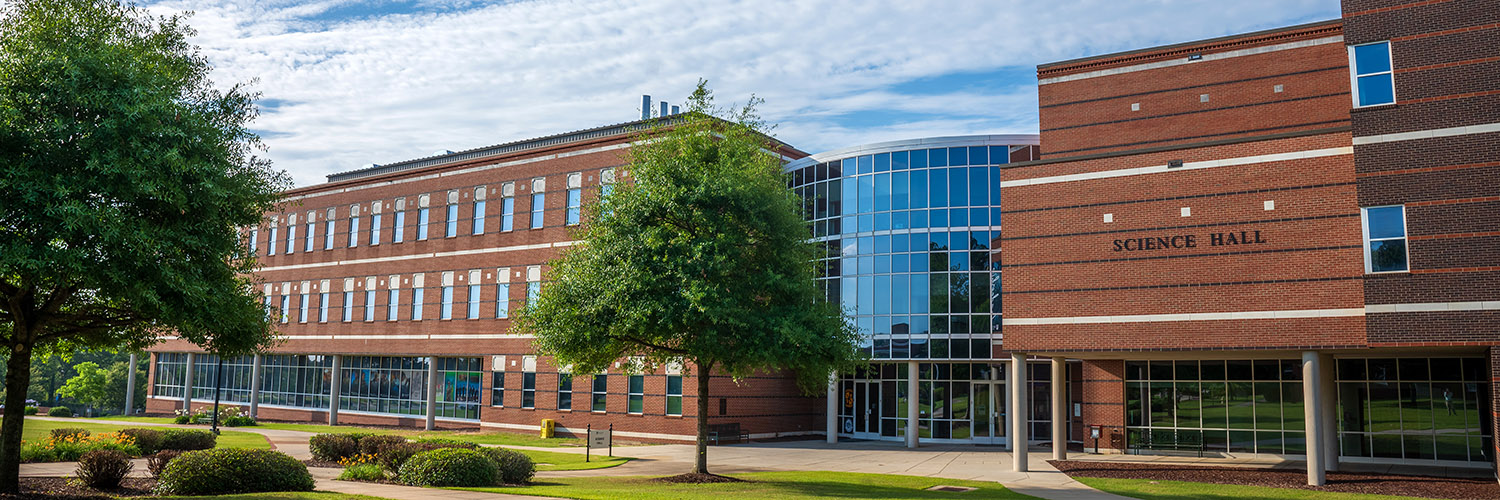
Collaborative for Disaster Health Sciences
When disasters strike, healthcare systems are often pushed to their limits, not only by the severity of the event but also by internal and community-wide preparedness gaps. It is imperative that hospitals, first responders, public health agencies, and community partners prepare collectively to respond and recover as a coordinated system when disasters occur. However, too often, they do not.
The School of Public Health’s Collaborative for Disaster Health Sciences (CDHS) at Augusta University seeks to alleviate this challenge by strengthening healthcare system resilience and improving coordination, preparedness, and response across the entire community.
Contact Us
Collaborative for Disaster Health Sciences
Summerville Campus
2500 Walton Way Augusta, GA 30904
Why This Matters Now
Disasters are growing in their frequency and intensity. Since 2020, the United States has averaged $23-$25 billion in losses due to disasters per year. For context, in the 1980s, the United States averaged approximately $8 billion in losses due to disasters per year.
Healthcare facilities are far from immune to the devastation caused by disasters. Whether it is taking a direct hit from a tornado, hurricane, or flood, dealing with active shooter events and cyber attacks, or taking a surge of patients during a community or statewide response, healthcare facilities must be operationally ready. However, despite their best efforts, many healthcare facilities perform poorly when faced with responding to disasters due to a myriad of reasons:
- Competing priorities
- Lack of funding for preparedness activities
- Low-frequency, high-consequence events
- Lack of surge capacity because empty hospital beds are not profitable
- Leadership does not prioritize preparedness
- Lack of involvement with community partners
- Lack of culturally competent training and dedicated staffing for preparedness
The Collaborative for Disaster Health Sciences is designed to fill these gaps, serving as a centralized hub for training, planning, research, workforce development, and technical assistance that strengthens healthcare coalitions’ performance and healthcare system outcomes.
What We Do
CDHS aims to reduce disaster-driven strain on healthcare by strengthening the networks that support it.
- Strengthen Healthcare System Preparedness
- Serve as a Strategic Partner to Healthcare Coalitions
- Improve Pre-Hospital Care and Coordination
- Reduce Preventable Demand on Healthcare Systems
- Build a Scalable Model for Disaster Health Training
- Implement Academic Emergency Management
The interdisciplinary structure of Augusta University’s schools and colleges allows CDHS to address healthcare resilience across staff, space, stuff, and systems, a combination unmatched in Georgia.
Leadership That Delivers
CDHS is led by Dr. Curt Harris and Paul Link, CAPT USPHS – retired, both nationally recognized leaders in disaster management and medicine:

Dr. Harris, PhD
706-380-1456
- Approximately $50 million in external funding secured to increase preparedness activities nationally and globally
- Proven success in building interdisciplinary, high-impact programs both nationally and internationally
- Extensive experience working with healthcare systems, governments, and coalitions
- Proven translational researcher with numerous peer-reviewed publications in leading disaster journals and hundreds of technical reports
Paul Link, CAPT USPHS - retired
706-721-8305
- National leader in healthcare preparedness; project manager for over 15 years with the Administration for Strategic Preparedness and Response (ASPR)
- Oversaw development and implementation of local and state healthcare programs totaling $70M+ annually
- Disaster management program builder with expertise in organization, planning, training, exercises, and resource management
The Collaborative for Disaster Health Sciences at Augusta University is positioned for rapid growth and measurable impact.
Our Projects
Our projects include needs assessments, EOP development and updating, leadership training, exercise conduct and evaluation, and technical assistance tailored to healthcare providers, healthcare coalitions, and communities. Community-engaged approaches will ensure that research and training are culturally competent and grounded in real-world challenges.
- Southern Regional Disaster Response System (SRDRS)
- Training and Education
- Plan Development
Our Collaborators
CDHS serves as a state, national, and international hub, partnering with:
- DHHS
- Local and State Public Health
- Large Healthcare Systems
- Rural Acute Care Hospitals
- Healthcare Coalitions
- Long Term Care Facilities
- DHS
- Nonprofits
- For Profits
- Academic Institutions
- Local and State Emergency Management
Invest in Tomorrow’s Preparedness Today
We are seeking partners to help launch and scale our Collaborative for Disaster Health Sciences into a statewide and national asset.
Disasters of all shapes and sizes will continue to test our already fragile healthcare systems. However, what we invest now will determine whether those systems, and the people who rely on them, succeed or fail. By investing in CDHS, you or your organization can be part of the solution.
Let’s build the future of disaster health, together. We invite you to partner with Augusta University to create a prepared ecosystem that strengthens healthcare where it matters most and scales solutions that communities across the nation need.
What Your Support Enables
Your investment will directly support:
- Development and implementation of culturally competent training programs
- Innovating, developing, and executing disaster exercises for healthcare providers and HCCs
- Planning and coordination efforts that strengthen regional response systems
- Development of a scalable, national training model
- Student support activities
Initial Investment Need
- $250,000 annually for three years to establish core infrastructure
- This investment will catalyze our goal of obtaining $1M+ annually in external funding
Return on Impact
Your support will help achieve:
- Improved health outcomes and fewer deaths
- Stronger, more coordinated regional response networks
- Reduced patient surge through improved preparedness and early intervention
- A nationally recognized model for disaster health training and system resilience
- Training for the next generation of emergency managers and public health preparedness professionals
This is a high-leverage investment, one that strengthens not just individual organizations, but entire systems of care.
With philanthropic investment, CDHS can:
- Develop scalable training programs delivered across Georgia and beyond
- Serve as a regional and national resource for healthcare preparedness
- Position Augusta University as a leader in disaster health innovation
- Support students to reduce the cost of higher education and train the next generation
**Include "CDHS" in the comment box at the end of the form**