Georgia Cancer Center research reveals kidney cancer growth, survival
Researchers at the Georgia Cancer Center at Augusta University and Wellstar MCG Health have discovered new information about how kidney cancer cells grow and survive.

Stephen Tymajeski, PhD
Assistant Professor
Jump to: Section Two Section Three Featured News & Events
Faculty | Neuroscience & Regenerative Medicine
Our lab is interested in understanding how the cytoskeleton is regulated to allow for efficient and selective motor transport throughout the neuron. We utilize a number of techniques within the lab with a heavy focus on live cell imaging to probe and manipulate the dynamic changes constantly occurring within a neuron.
Nulla vitae libero pharetra augue. Etiam porta malesuada magna mollis euismod. Eget lacinia odio sem nec elit.
Nulla vitae libero pharetra augue. Etiam porta malesuada magna mollis euismod. Eget lacinia odio sem nec elit.
Lorem ipsum dolor sit amet, consectetur adipiscing elit, sed do eiusmod tempor incididunt ut labore et dolore magna aliqua.
Curabitur blandit tempus porttitor. Nulla vitae elit libero, a pharetra augue.
Curabitur blandit tempus porttitor. Nulla vitae elit libero, a pharetra augue.
Curabitur blandit tempus porttitor. Nulla vitae elit libero, a pharetra augue.
Curabitur blandit tempus porttitor. Nulla vitae elit libero, a pharetra augue.
Curabitur blandit tempus porttitor. Nulla vitae elit libero, a pharetra augue.
Curabitur blandit tempus porttitor. Nulla vitae elit libero, a pharetra augue.
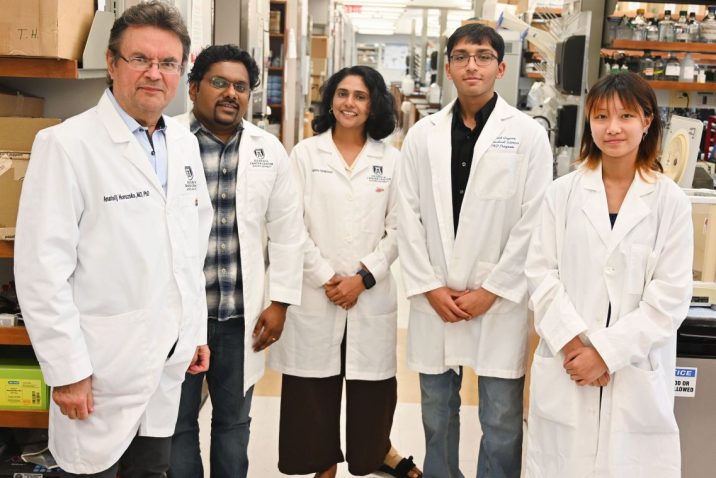
Researchers at the Georgia Cancer Center at Augusta University and Wellstar MCG Health have discovered new information about how kidney cancer cells grow and survive.
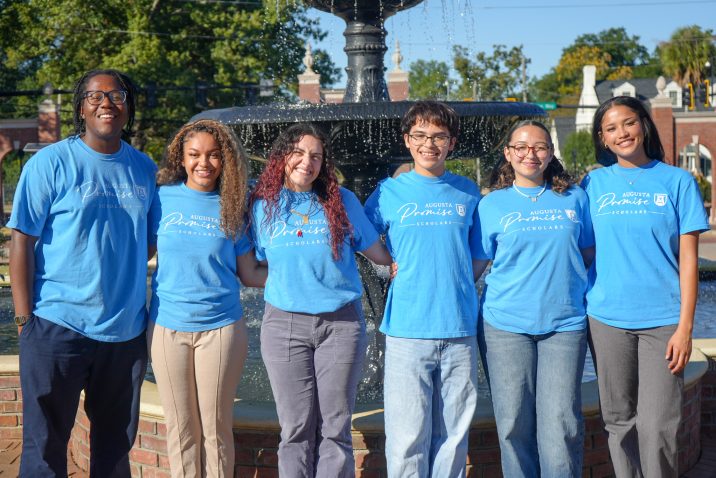
"Being a part of the third cohort of the Augusta Promise Scholarship Program is such a blessing, but I also see it as a call to action," says Taliyah Powell.

"I enjoy getting to see these students learn something new. I also love seeing how happy they are about their code working on their completed projects," says Madeline White.
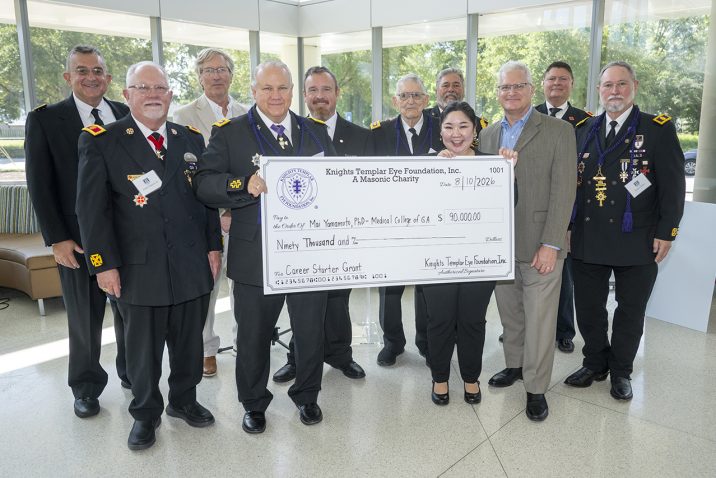
"I believe our work can ultimately help patients. That is what motivates me as a scientist," says Mai Yamamoto, PhD.