Research at COEHD
The Office of the Associate Dean for Research supports COEHD faculty efforts to (1) identify, apply for, and successfully obtain grants for research, (2) build and sustain scholarship pursuits, and (3) engage graduate and undergraduate students in research.
Internal Grant Programs
The COEHD Internal Grant Programs consist of (1) Faculty Professional Travel Grant, (2) Faculty Research Grant, (3) Student Professional Travel Grant. Applications are solicited each September and January.
The Dissertation Grant is intended to support dissertation projects for doctoral students. The COEHD Summer Writing Fellowship is intended to provide summer salary support for faculty to develop competitive proposals for extramural funding. Both funding opportunities are announced in the Spring semester.
Grant Submission and Administration
Proposal solicitations or funding opportunities are posted in the weekly newsletters. COEHD faculty can refer to the COEHD page in MyAugusta for guidelines and procedures regarding grant administration.
Pre Award Information
The Associate Dean for Research works in conjunction with the Division of Sponsored Programs Administration (DSPA) and the Summerville Interdisciplinary Research Office (SIRO) to facilitate the development and the submission of grants. COEHD faculty planning to submit a research proposal are encouraged to submit a Notice of Intent and notify SIRO before submitting any grant application.
All extramural grants must complete internal routing and be submitted through the Division of Sponsored Programs Administration (DSPA). Internal routing should be completed no less than five (5) working days before the grant deadline.
Pre-award services in DSPA also assists with submissions of renewals and no-cost-extensions.
Post Award Information
The Associate Dean for Research works in conjunction with the Division of Sponsored Programs Administration (DSPA) monitor budgeting, spending, and close-out of extramural awards. We work with the PI to ensure that all regulatory reporting is completed and that all requirements are met before projects are closed out.
Distinguished Lecture Series
Past Speakers
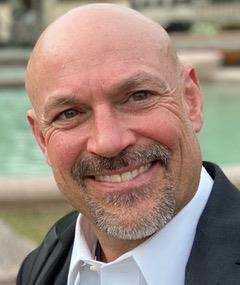
Paul L. Morgan, PHD
- Director of the University at Albany’s Institute of Social and Health Equity
Racial and Ethnic Disparities in Disability Identification in U.S. Schools
Although a focus of long-standing federal legislation and recent regulation, to what extent students of color are being over- or under-identified as having disabilities while attending U.S. schools has been unclear. In this talk, Dr. Morgan overviewed the federal policy landscape and reported on replicated findings across a series of studies indicating that, relative to similarly situated White or English-speaking students, students who are racial, ethnic, or language minorities are less likely to be identified as having disabilities and so receive potentially beneficial services and supports. This includes identification for disabilities generally as well as for the specific conditions of autism, health impairments, and learning disabilities. Dr. Morgan concluded with implications of the findings for both policy and practice.
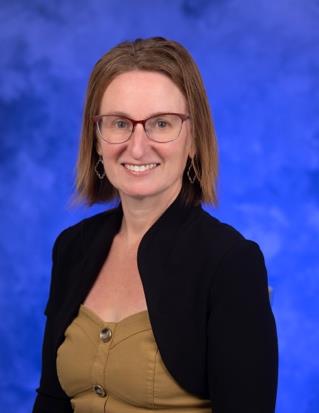
Lauren Jodi Van Scoy, MD
- Professor of Medicine, Humanities, and Public Health Sciences at Penn State College of Medicine | Pulmonary and Critical care physician
Can AI Do Qualitative Research? Lessons from a Large-Scale Advance Care Planning Trial
This presentation used Project Talk as a case study to examine both the opportunities and methodological challenges of conducting qualitative research at scale. Dr. Van Scoy described the trial’s community-engaged approach to ACP intervention delivery and then explored an emerging methodological question: Can large language models meaningfully assist with rigorous qualitative analysis? Drawing on proof-of-concept work comparing human and LLM-assisted coding, she examined where artificial intelligence performs well, where it falls short, and what happens when seemingly simple AI workflows collide with the considerably messier realities of qualitative data, coding frameworks, and software infrastructure. The presentation introduced a hybrid human–LLM approach designed to preserve human interpretation and methodological rigor while leveraging AI for efficiency and scale.
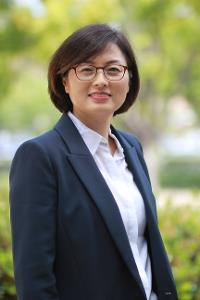
Young-Suk Grace Kim, PHD
- Professor at the School of Education, University of California at Irvine
The Science of Reading-Writing Connections: Current Research and Educational Implications
How are reading and writing connected? Dr. Young-Suk Grace Kim examined the theoretical foundations and empirical evidence of reading-writing connections and their educational implications. The discussion was anchored in the Interactive Dynamic Literacy model, which emphasized the shared cognitive and linguistic skills between reading and writing, as well as the dynamic and reciprocal nature of their relations. She also explored implications for assessment and instruction.
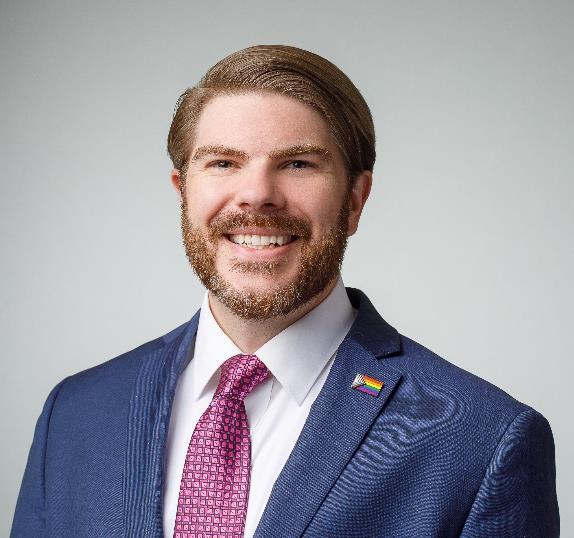
Craig S. Bailey, PHD
- Assistant Professor at the Yale Child Study Center and Director of Early Childhood at the Yale Center for Emotional Intelligence
Innovation, Curiosity, and Relevance in the Design of Meaningful Research
Research today is often guided by theories and methods developed under conditions that do not reflect the lived experiences of children, families, and educators. When research begins from abstract questions rather than real-world problems, the result can be misaligned constructs, inappropriate measures, and conclusions that are difficult to interpret or apply. Rigorous early childhood research begins by clearly defining problems and ensuring constructs reflect what is actually being studied. Using examples from efficacy trials, research-to-practice partnerships, observational measurement development, and social and emotional learning interventions, this talk examined how research questions, construct definition, measurement, and design choices are negotiated in naturalistic settings. Implications for researchers aiming to inform practice while maintaining methodological integrity were discussed.
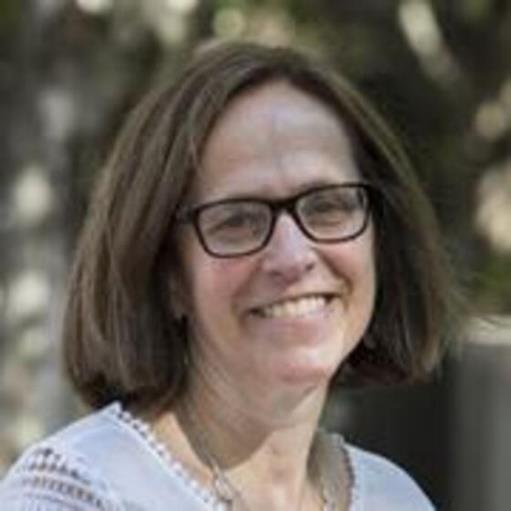
Barbara Wasik, PHD
- PNC Endowed Chair in Early Childhood Education in the Teaching and Learning Department in the College of Education and Human Development at Temple University
Promoting Language and Vocabulary Development in Young Children
Decades of research have demonstrated the importance of language development in young children’s learning to read and, ultimately, their long-term success in school. Yet, many early childhood educators have not been trained to provide these language experiences for children, especially in low-resourced communities. Our work has focused on providing professional development to teachers to support the development of language and vocabulary. These interventions have resulted in significant increases in teachers’ CLASS scores and significant increases in standardized measures of vocabulary for children. This research was presented in the context of working with public schools and childcare to bridge the research to practice gap. Challenges in funding to conduct field research also were also discussed.
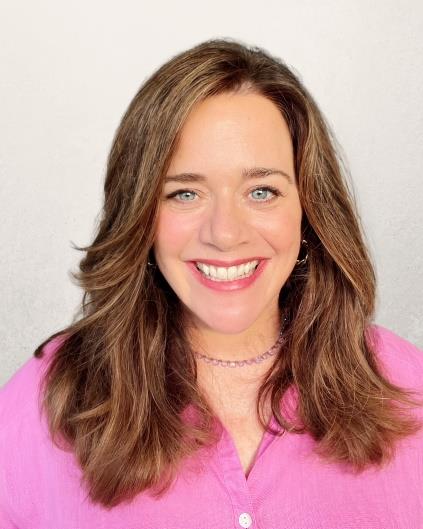
Heidi Carlone, PhD
- Katherine Johnson Chair of Science Education and Professor of Teaching and Learning at Vanderbilt University’s Peabody College
Good Questions, Clear Logic, Credible Designs: Making the Case for Qualitative Research
In this interactive session, Dr. Heidi Carlone drew on her experience designing and conducting qualitative research in STEM education and securing external funding for that work. Using examples — including a proposal abstract contributed by a participant — the group considered what reviewers need to understand, where important reasoning remains implicit, and how to make the logic and rigor of a proposed study more visible. Participants left with questions and principles they can use to strengthen their own research designs and make a compelling case for the work they want to do.