Project 4
Circadian clock control of endothelial identity & atherosclerosis through metabolic balance
The overall goal of this Project 4 is to elucidate how disruption of circadian rhythms impairs EC metabolism and shits the balance of ROS/NO and Sox17/Runx1 to promote endothelial dysfunction and accelerates atherosclerosis.
Previous study shows that loss of circadian rhythms in Bmal1 deficient mice results in elevated oxidative stress and EC dysfunction that are reversed by superoxide dismutase (SOD). Preliminary data suggest that genetic and environmental disruption of circadian rhythms accelerated atherosclerosis and that glycolysis is impaired in Bmal1-KO mice contemporaneously with imbalance of superoxide and NO. Mechanistically, genetic and environmental disruption of circadian rhythms promote a pronounced loss of active glycolytic kinase Akt, decreased expression of glycolytic enzyme PFKFB3, and altered balance of Sox17/Runx1 as vital to maintaining EC identity and function. These data support the hypothesis that loss of circadian rhythms promotes endothelial dysfunction via disruption of Akt signaling, impaired glycolysis, and loss of NO/ ROS balance and Sox17/Runx1 balance, which contributes to atherosclerosis. This hypothesis will be tested by performing following specific aims.
Project Aims
Aim 1
Will test whether impaired glycolysis in mice with compromised circadian rhythms disrupts the balance between oxidative stress and nitric oxide signaling to promote vascular dysfunction.
Aim 2
Will test the hypothesis that impairment of Akt1 caused by circadian dysfunction impacts endothelial function and atherosclerosis through changes in SOX17/RUNX1 balance.
Aim 3
Will test the hypothesis that drug and diet-induced stimulation of the circadian clock restores Akt, endothelial metabolism and improves endothelial function to mitigate atherosclerosis.
This project will provide novel insights into the importance of circadian rhythms in endothelial cells which includes the regulation of endothelial metabolism, ROS/RNS balance and phenotypic regulation. The identified pathways and experiments proposed will advance our understanding of endothelial dysfunction which is necessary to develop more specific and effective therapeutic approaches to improve endothelial function in cardiovascular disease.
Project Interactions
Project 4 will provide unique opportunities for Projects 1-3 to pursue the role of circadian rhythms in copper transport, leptin signaling and mitochondrial dynamics. Relevant reagents such as novel mice including EC specific Bmal1 KO, transgenic mice enabling inducible expression of active Akt in endothelial cells, EC specific Sox17 KO and viral vectors will be available to the other projects through the activities of Core B and C. Biological samples generated in Project 4, including isolated ECs, total RNA, lysates will also be shared freely with the other projects along with informatics data (RNAseq). The programmatic approach is essential for the studies proposed by Project 4, which will benefit from unique EC specific mice (Core B) and key assays to measure metabolism (Core B and C) and endothelial function (Core B, C), endothelial cell isolation (Core C), RNS/ROS (Core C) as well as unique expertise in metabolism (Dr. Huo), centralized, standardized assays and the experience of the internal advisory committee. Synergy between Project 4 and the other projects will facilitate a broader and more comprehensive range of experimental approaches. Project 4 and Project 1 both propose to investigate the role of EC phenotype in atherosclerosis and synergy between these projects will enable the sharing of mice (mTmGx Cdh5 Cre), shared approaches to flow sorting and analysis of phenotype. Interaction with Project 2 will provide opportunities to study the role of leptin receptors which have been shown to have a role in advancing the circadian clock. Experiments proposed in Aim3 of Project 4 will utilize pharmacological and dietary approaches to stimulate the circadian clock. Mice from Project 2 will enable novel experiments to test whether EC leptin receptors are important in approaches to stimulate the circadian clock and subsequent changes in metabolism, redox balance and endothelial function. Project 3 is heavily focused on the dynamic regulation of mitochondrial function and angiogenesis. The circadian clock has been shown to be important in regulating metabolism and while Project 4 is primarily focused on glycolysis, collaboration with Project 3 will provide unique opportunities to study how circadian rhythms in ECs influence mitochondrial function and angiogenesis. Both Akt and the circadian clock have been shown to modulate Drp activity and the sharing of reagents and expertise between Project 3 and 4 will enable a more comprehensive analysis of metabolic activity in endothelial cells.
Project Leader
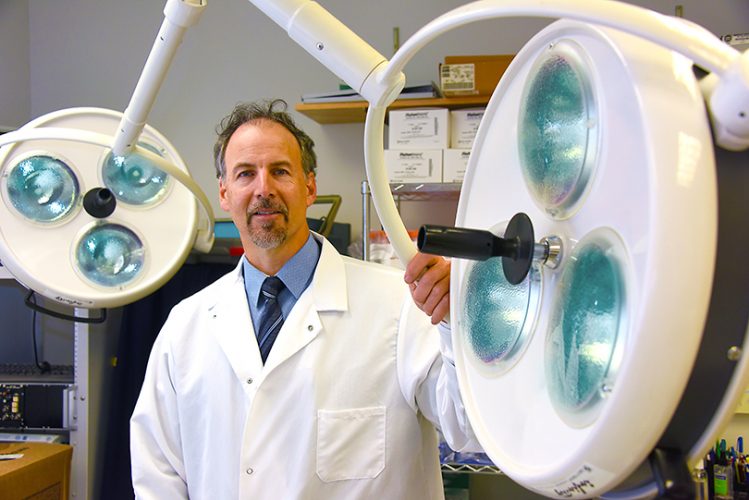
Dr. David Fulton is a Regents Professor of Pharmacology & Toxicology & Director of the VBC at MCG/AU. Dr. Fulton has strong expertise in the area of endothelial biology & NO/eNOS & NADPH oxidases in cardiovascular disease for the past twenty years. He is one of the first to demonstrate that Akt phosphorylates eNOS to increase NO production in ECs. He has an extensive history of collaboration with Dr. Dan Rudic, Professor of Pharmacology & Toxicology at MCG/AU and a leading expert on circadian rhythms & circadian clocks in vascular disease & remodeling, & mouse models of vascular disease. Relevant to the current PPG application, Dr. Rudic has previously observed robust circadian oscillations of glycolytic enzymes including PFKFB3 in the vasculature (Circulation 2005) and he has also found direct evidence that the circadian clock controls glucose homeostasis (Plos Biol 2004). Thus, in this PPG, Dr. Fulton (PI) & Dr. Rudic (Co-I) will seek to define novel roles of circadian rhythms & Bmal1 in the control of endothelial function and identity via changes in cell glycolysis, Akt signaling, ROS/RNS imbalance and will employ novel EC specific knockout mice & environment-driven disruption of clock function & pharmacological and dietary rescue of clock function. Dr. Fulton will serve as Project 4 Leader, Co-I of Core C, while Dr. Dan Rudic will serve as Co-I of Project 4.