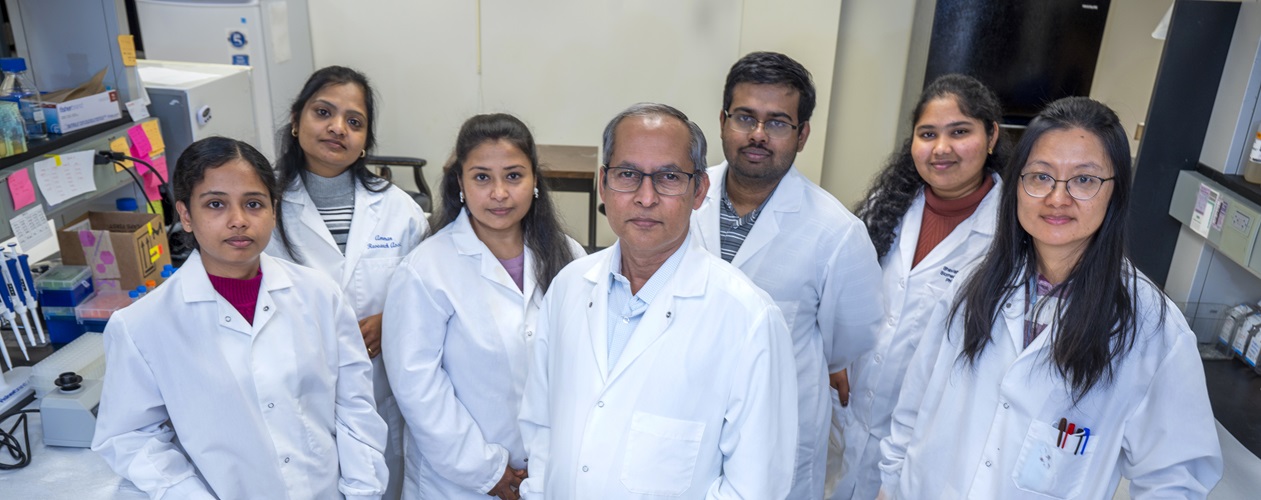
Department of Pharmacology & Toxicology
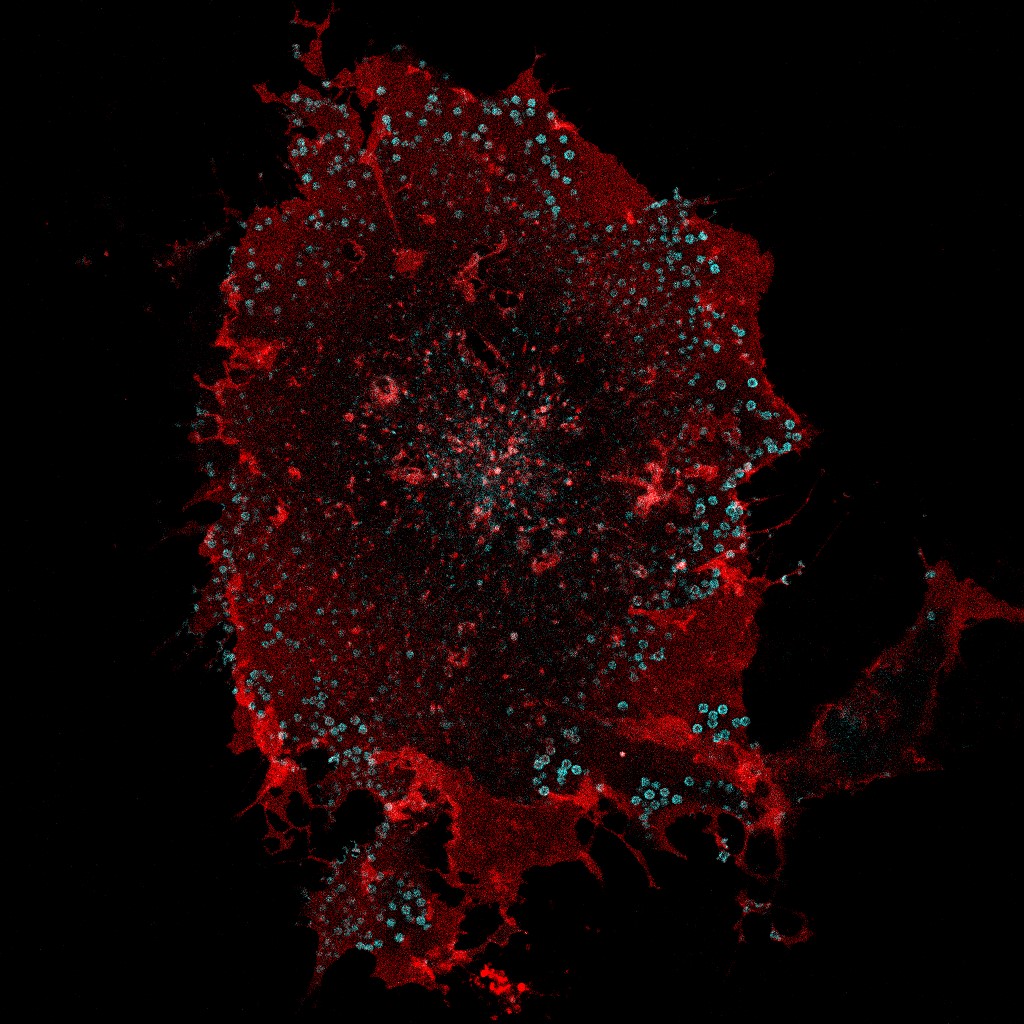
β adrenergic receptors (blue) clustered into artificial microdomains on the surface of a living COS7 cell (red).
Originally developed to discover how remedies and poisons affect man, modern pharmacology
lays the groundwork to discover and develop future generations of therapeutics.
Pharmacology's scope has broadened to include: computer-assisted drug design; genetic
screens; protein engineering; and new drug-delivery vehicles like viruses and artificial
cells.
The department's history of accomplishments includes the discovery of the adrenergic receptor subtypes-alpha and beta, which led to the development of several drugs used to treat cardiovascular disease. Cardiovascular and neuroscience studies are the focus of the department's research programs.
Raymond P. Ahlquist, working in this Department, first defined α and β adrenergic receptors in 1948. This discovery eventually led to the development of “β blocker” drugs for hypertension and heart disease.
Contact Us
Department of Pharmacology & Toxicology
Health Sciences Campus
Carl T. Sanders R & E Building
706-721-2345
RM 3530
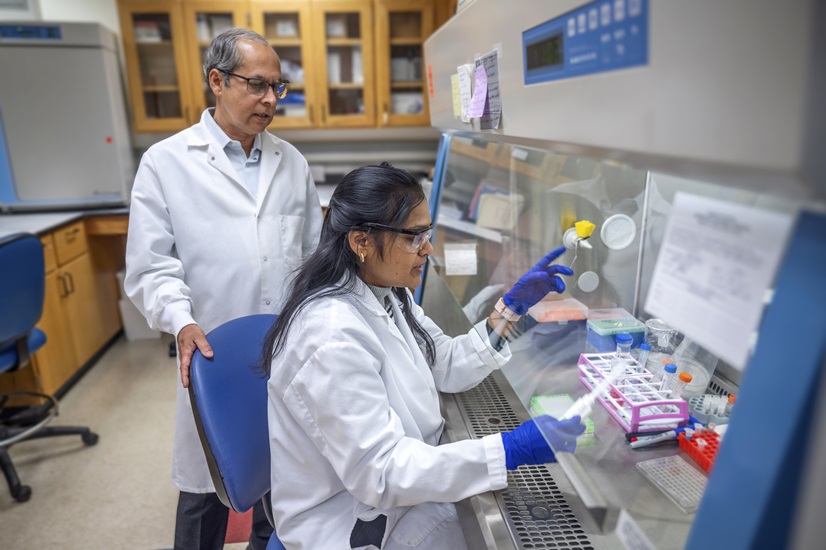
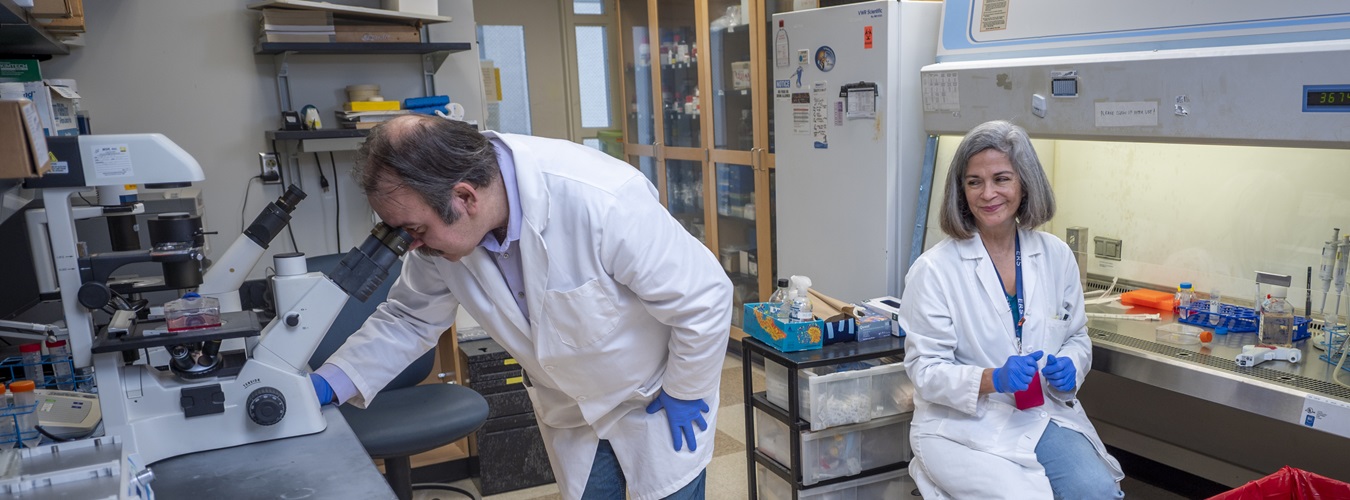

Department Highlights
- Research in the areas of cardiac, vascular, and pulmonary disease, schizophrenia, learning and memory, neuroprotection and drug abuse.
- Experimental approaches range from the gene to whole animal.
Pharmacology & Toxicology News
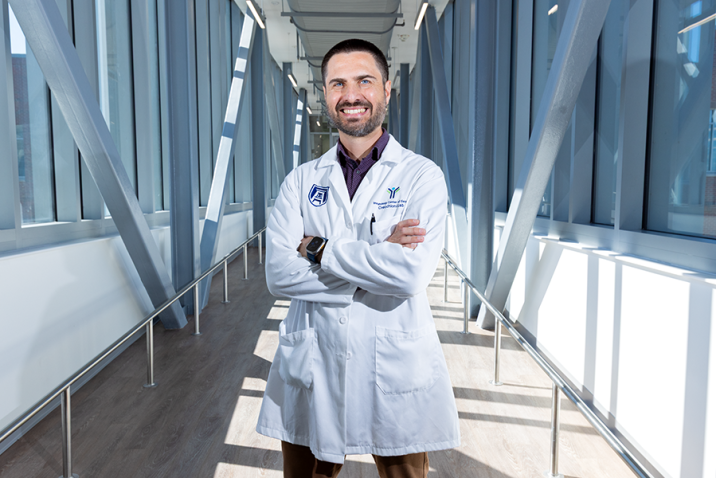
IMMCG researcher awarded prestigious NIH Director's Award
IMMCG researcher awarded prestigious NIH Director's Award
MCG researchers uncover key pathway for new blood vessel growth
MCG researchers uncover key pathway for new blood vessel growth