Neuroscience
Do you have a passion for understanding the brain, behavior, and the complexity of the nervous system? Are you intrigued by how neuroscience is transforming medicine, technology, and our understanding of what makes us human?
The Neuroscience program at Augusta University offers a distinctive, interdisciplinary experience that prepares students for advanced study, professional healthcare programs, and careers in the rapidly expanding science and technology workforce. Housed within the College of Science and Mathematics, this program integrates multiple scientific disciplines to provide a comprehensive and modern approach to neuroscience education.
Neuroscience is one of the fastest-growing and most dynamic fields in science. Advances in brain imaging, molecular biology, and computational modeling are revolutionizing how we understand cognition, behavior, and disease. A degree in neuroscience equips students with a strong foundation in biology, chemistry, and psychology while developing highly sought-after skills in critical thinking, data analysis, and scientific inquiry. Students benefit from a rigorous yet flexible curriculum, hands-on research opportunities, and preparation for a wide range of impactful careers.
Neuroscience is for you if you consider yourself
Life-Changing
Life-Saving
Education
Want to learn more about the Neuroscience program at Augusta University?
Request InfoWhat You'll Study
Coursework
The BS in Neuroscience program is designed to provide students with a strong foundation in the structure and function of the nervous system across multiple levels of organization. Coursework spans molecular, cellular, systems, behavioral, and cognitive neuroscience, ensuring a comprehensive understanding of the field.
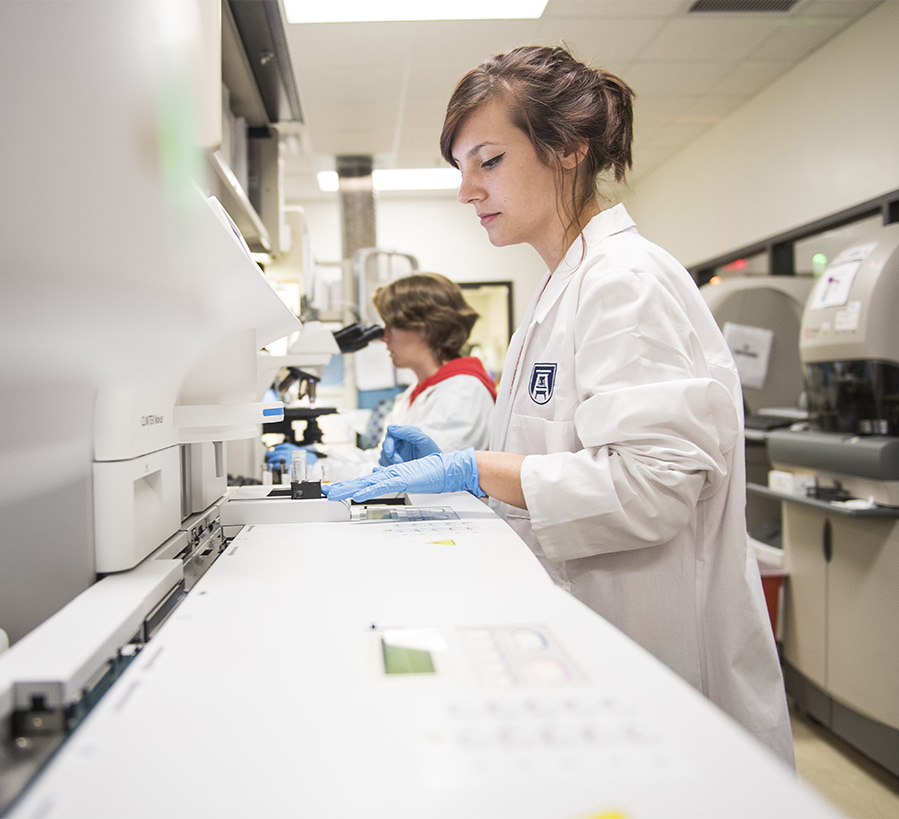
A defining feature of the program is its emphasis on experiential learning. Students engage in a required research experience under the mentorship of faculty actively conducting neuroscience research. This hands-on component allows students to apply classroom knowledge to real-world problems, develop technical laboratory skills, and build a competitive profile for graduate school or employment.
Experience-based Education
Outside the Classroom
A diverse array of research projects offer exciting hands-on experiences that enhance
resumes and develop valuable skills.
The Transdisciplinary Research Initiative in Inflammaging and Brain Aging (TRIBA)
at AU provides opportunities for students in this program to work with neuroscientists
researching real world problems. The emphasis on research means graduates leave the
program with practical lab experience employers and graduate schools are looking for.
A number of awards recognize student success and celebrate academic achievement.
Research & Innovation
Whether you’re an undergraduate or graduate student, you’ll have opportunities to create your own research projects or work with faculty to tackle some of the world’s most complex and pressing challenges.
New Home
A new, state-of-the-art building with 22 teaching labs, a tutoring center and a top floor dedicated to research is located on the Health Sciences Campus, maximizing educational and research opportunities.
Learning Community
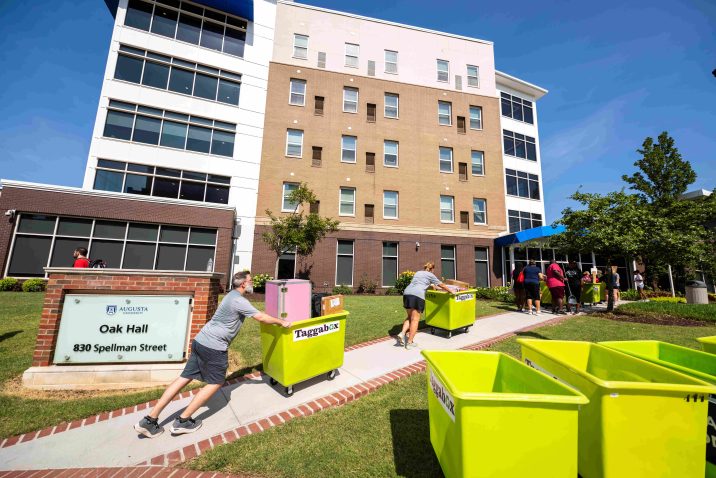
The College of Science and Mathematics’ living learning community helps incoming freshmen thrive during that critical first year of college by offering a supportive network of like-minded students and plenty of engagement opportunities.
Tutoring Center
A tutoring center specifically for science and math students is located on the Health Sciences Campus, with similar help also offered at the Learning & Academic Support on the Summerville Campus.
Your Future
Career Options
A degree in neuroscience opens doors to a wide and diverse range of career pathways. Many graduates pursue advanced degrees in neuroscience, medicine, psychology, or related disciplines, leading to careers in research, academia, and healthcare.
Graduates are also well-prepared for roles in the biotechnology and pharmaceutical industries, including drug development and clinical research. Additional career paths include education, science communication, government agencies, consulting, and emerging fields such as artificial intelligence, robotics, and data science.
The average starting salary for neuroscience graduates is approximately $50,000, with strong projected job growth. Top career trajectories include neurology, psychiatry, neurosurgery, medical consulting, and data science. With its interdisciplinary training and emphasis on analytical and research skills, the neuroscience degree positions graduates to make meaningful contributions across scientific, medical, and technological fields.

Why Augusta?
As Georgia’s only Health Sciences Center of Excellence, students have the chance to apply for the BS-MD or BS-DMD programs as well as follow pre-professional programs that prepare them for continuing their academic journey.
An emphasis on research means graduates leave the program with the practical lab and field experience employers and graduate schools are looking for.
A full range of student support services exist to make sure that students have the opportunity to find assistance, advice or mentorship.
A new building in the heart of the Health Sciences Campus puts Neuroscience students in the middle of the university’s research enterprise, maximizing opportunities for internships and mentorships.

AU provost kicks off academic year announcing new cohort of Provost Fellows
AU provost kicks off academic year announcing new cohort of Provost Fellows