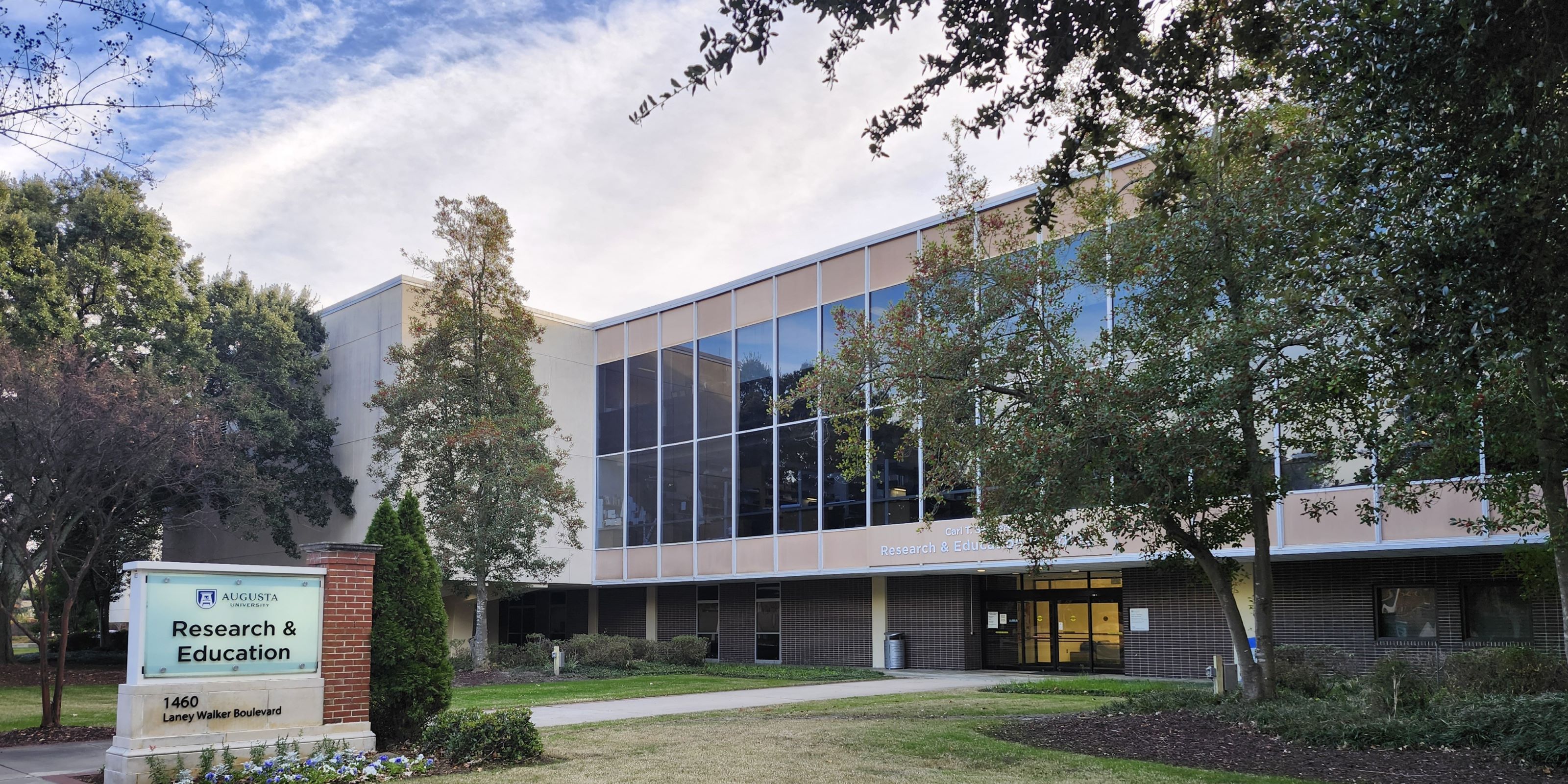
Cellular Biology & Anatomy
Graduate Program
The Department of Cellular Biology and Anatomy in the Medical College of Georgia at Augusta University offers a graduate program leading to a Doctor of Philosophy degree with a major in Cellular Biology and Anatomy.
Our program provides training in the broad areas of developmental biology, cellular biology and neuroscience for students interested in pursuing careers in research or teaching as faculty members in medical schools. The program is sufficiently flexible, however, to accommodate training for careers in clinical science departments, other health science professional schools, or in private, government, and industrial research laboratories or foundations.
PhD. students learn state-of-the-art research techniques and modern approaches to fundamental biomedical questions while also developing a sound knowledge of relevant classical disciplines of anatomy such as histology, embryology, neuroscience and gross anatomy.
In the first term, students are introduced to the research of each faculty member through a special course. Laboratory rotations and basic science courses of general relevance to research are prominent components of the first year. In the second year, additional courses of special relevance are taken as agreed upon by the student and his or her chosen thesis advisor. The third and following years are devoted entirely to thesis research.
In addition to specific course requirements, students must complete PhD degree requirements, including satisfactory performance on the Comprehensive Examination, development of an approved research proposal, writing and obtaining approval of the doctoral dissertation, and satisfactory performance on the Final Oral Examination (dissertation defense).
The Doctor of Philosophy curriculum is not lock-step; students do not graduate as a class at the end of a specific semester. The average time to degree is approximately 5 years of full-time, year-round study. The PhD curriculum is individualized for each student based on the Advisory Committee's recommendations. The number and type of advanced (2nd year and beyond) elective courses vary, and may include courses within the Cellular Biology and Anatomy program as well as courses in other disciplines.
Applications to the biomedical science PhD program are accepted throughout the year, however, the deadline for receiving applications for fall semester admission is January 15. Applications received after the deadline are considered on a space-available basis.
For information about Doctor of Philosophy with a Major in Cellular Biology and Anatomy; Description, Admissions Information, Financial Support and Cellular Biology and Anatomy Curriculum, please click on our CBA Student Handbook link.
For a listing of Departmental Graduate Students, how to contact other students and resources for students, please click on our Graduate Students link.
Cellular Biology & Anatomy
CBA Graduate Program Minimum Expectations Mentee/Student
Time & Attendance
- Generally, a minimum of 40 hours per week devoted to research and program-related activities, including laboratory research, literature review, data analysis, scientific writing, seminars, journal clubs, and required coursework (stipend paid hours + credit hours for ANAT9210 or ANAT9300).
- Attendance at all departmental seminars and journal club course activities. Unexpected absences: 1st day should be reported to PI, 2 or more days should be reported to PI and Program Director, 3 or more days may require evidence of absence (at PI’s discretion).
- In person work unless otherwise discussed with PI. At PI’s discretion to request evidence of work completed while off campus.
- Planned vacations or other time away approved at PI’s discretion.
Communication
- Regular communication with PI regarding experimental plans, data collected, overall progress.
- Communicate promptly with the PI regarding absences, significant schedule changes, research challenges, or other circumstances that may affect academic or research progress.
Productivity
- Progress report filed with TGS each semester.
- Hold 1 committee meeting per year.
- Publish or be accepted to publish as first-author on at least 1 peer-reviewed original research article (review article does not count) prior to graduation; additional publications are encouraged.
- Complete required program forms and milestones by the established deadlines.
Presentations
- Present 1 departmental seminar per year (3rd year onwards; 2nd year optional).
- Present 2 departmental journal clubs per year (fall, spring).
Knowledge & Research Responsibilities
- Primary responsibility for knowledge of all critical program milestones.
- Maintain accurate, complete, and organized research records and appropriately document experimental methods, data, and analyses.
- Follow all applicable requirements related to research integrity, laboratory safety, animal or human subjects research, and professional conduct.
CBA Graduate Program Minimum Expectations Mentor/Faculty
Time
- Regular in-person or virtual meetings with mentee to evaluate and discuss their project and overall progress.
- Work closely and collaboratively with the mentee to establish a research project plan.
- Ensure that the mentee has a successful framework to complete all program milestones in the timeframe allotted.
Communication
- Clear communication with mentee regarding attendance, working hours, remote work, punctuality, and deadlines.
- Discuss overall lab expectations and encourage open communication throughout the program.
Feedback & Guidance
- Provide timely feedback on writing projects, presentations, research activities (e.g., experimental design, data interpretations) and responses to mentee questions.
- Model ethical and professional behavior in science / academia.
- Submit an evaluation and grade to TGS each semester per student.
Support
- Secondary responsibility for knowledge of all critical program milestones.
- Promote mentee’s development as a scientist, and support them in identifying career goals and working to achieve those goals.
- Monitor mentee’s progress toward program milestones and complete required evaluations and program documentation in a timely manner.
Encourage
- Cultivate a supportive, respectful work environment.
- Acknowledge and appropriately recognize the mentee’s contributions to the laboratory through authorship, presentations, and other scholarly work.
GRADUATE PROGRAM MILESTONES
Yearly Requirements
- 1 Committee Meeting 2nd year onwards
- 1 Seminar Presentation 3rd year onwards
Semester Requirements
- 1 Progress Report 1st year onwards
CBA Offered Electives
- Investigative Techniques in Cell Biology (3)
- Fundamentals of Vision Science (3)
Other Typical Electives
- Scientific Grant Writing (1)
- Intro to Immunology and Infectious Disease (3)
Fall-Spring 1st Year
Core Courses
Biomedical Sciences Ph.D. core curriculum and laboratory rotations.
Summer 1st Year
Graduate Histology
CBA graduate students are required to take graduate histology (ANAT 8050).
Fall 2nd Year
Committee Formation
With the major advisor, assemble an advisory committee of 4 additional faculty.
Prior to Comp Exam
Comprehensive Exam
It is recommended to have a topics meeting ~2 months before the exam. It is helpful to come prepared with 4-5 topic suggestions in draft form as prepared by the major advisor and student.
Summer 2nd Year
Graduate Histology
CBA graduate students are required to take graduate histology (ANAT 8050) if not already taken.
Summer 2nd-Fall 3rd Year
Comprehensive Exam
The comprehensive exam needs to be completed by Thanksgiving of the 3rd year.
Fall-Summer 3rd Year
Proposal Defense
The defense proposal needs to be completed a minimum of 3 semesters before graduation. A draft of the proposal needs to be sent to the committee 4 weeks prior to the defense.
Certificate in Anatomy Education Program Entry
*Optional*
Summer 4th Year or Later
Final DefenseReminders Leading Up to Graduation
- Your stipend ends 2 weeks after your defense or at the end of the semester based on what is agreed upon with TGS. Make sure to prepare accordingly!
- If you are filing for OPT, please make sure your paperwork is submitted at least 3 months before graduation. (Can vary based on country. Please confirm)
Department of Cellular Biology & Anatomy
GRADUATE PROGRAM MILESTONES
Yearly Requirements
- 1 Committee Meeting 2nd year onwards
- 1 Seminar Presentation 3rd year onwards
Semester Requirements
- 1 Progress Report 1st year onwards
CBA Offered Electives
- Investigative Techniques in Cell Biology (3)
- Fundamentals of Vision Science (3)
Other Typical Electives
- Scientific Grant Writing (1)
- Intro to Immunology and Infectious Disease (3)
Fall-Spring 1st Year
Core Courses
Biomedical Sciences Ph.D. core curriculum and laboratory rotations.
Summer 1st Year
Graduate Histology
Graduate Histology
CBA graduate students are required to take graduate histology (ANAT 8050).
Fall 2nd Year
Committee Formation
Committee Formation
With the major advisor, assemble an advisory committee of 4 additional faculty.
Prior to Comp Exam
Comprehensive Exam
It is recommended to have a topics meeting ~2 months before the exam. It is helpful to come prepared with 4-5 topic suggestions in draft form as prepared by the major advisor and student.
Summer 2nd Year
Graduate Histology
CBA graduate students are required to take graduate histology (ANAT 8050) if not already taken.
Summer 2nd-Fall 3rd Year
Comprehensive Exam
The comprehensive exam needs to be completed by Thanksgiving of the 3rd year.
Fall-Summer 3rd Year
Proposal Defense
The defense proposal needs to be completed a minimum of 3 semesters before graduation. A draft of the proposal needs to be sent to the committee 4 weeks prior to the defense.
Certificate in Anatomy Education Program Entry
*Optional*
Summer 4th Year or Later
Final DefenseReminders Leading Up to Graduation
- Your stipend ends 2 weeks after your defense or at the end of the semester based on what is agreed upon with TGS. Make sure to prepare accordingly!
- If you are filing for OPT, please make sure your paperwork is submitted at least 3 months before graduation. (Can vary based on country. Please confirm)