
Program Summary & Highlights
From the MCG Training Director, Christopher Drescher, PhD
Our faculty share a deep commitment to educating our future health care professionals, striving for compassionate and excellent clinical service, and advancing science. We are excited to support trainees as they progress to careers of accomplishment and meaning. Integral to our internship training are joint educational and clinical service activities with primary care physicians, psychiatrists and other physician specialists, nurses, social workers, and other allied health professionals.Note: This webpage focuses primarily on training experiences for Augusta University paid interns (Child and Family, Forensic, Health Psych - Chronic Illness, and Health Psych - Integrated Primary Care tracks). For more details on the Charlie Norwood VAMC positions, see here.
Training Model:
Our training model focuses on three primary facets of training in the development of professional psychologists:
- Training in the implementation of essential practice skills in key field settings
- Training in an empirical approach to practice (fostering attitudes of empiricism and reflection)
- Training in the provision of care for underserved populations and areas;
Overview of the Organization of the Internship:
Two required 4-month rotations:
- The General Practice Rotation – Clinical training sites include the MCG, AU Summerville campus, or East Central Regional Hospital. This rotation focuses on opportunities for development of psychological assessment skills, and individual and group psychotherapies.
- The Integrated Health Psychology Rotation – Clinical training occurs at MCG sites. Located in various inpatient and outpatient medical settings spread across MCG hospital, outpatient clinics, and the MCG Children’s Hospital of Georgia, this rotation focuses on acquiring skills that will enable psychology interns to apply fundamental psychological assessment and treatment principles to health care settings with a goal of training interns to function independently in interdisciplinary health care settings.
One 4-month Emphasis Track Rotation:
Selected prior to entry into the internship program, the Emphasis Track Rotations allow interns to experience more focused training opportunities that are consistent with their long-range career interests. At present there are four Track choices available at MCG, including:
- Child & Family Track
- Forensic Psychology Track
- Health Psych – Chronic Illness Track
- Health Psych – Integrated Primary Care Track
In addition to the 4-month Emphasis Track Rotation, one day of each week for the entire year is also devoted to emphasis training within your chosen track rotation thereby facilitating more depth and continuity in this aspect of your training experience.
Seminars & Other Educational Opportunities:
There are three required seminars that meet on Thursdays:
The Diagnostic/Treatment Seminar meets weekly and includes application of a “Problem-Based Learning” (PBL) model. The PBL approach to learning employs a clinical case/problem as the vehicle of learning and demands development of clinical/scientific reasoning.
- The Psychotherapy Process Seminar meets weekly and provides a laboratory to develop
skills of empiricism and reflection in the nonparticipant mode of peer supervision
and in the participant mode of a live therapy session presentation. Each Intern, along
with the faculty/seminar directors, take turns presenting a live psychotherapy case.
Didactics for the seminar focus upon: (a) Common factors in psychotherapy; (b) Supervision,
and; (c) Therapy termination.
Note: This seminar also facilitates a 10-week course (two hours per week) that reviews Cognitive Behavior Therapy and provides an introduction to Acceptance and Commitment Therapy. - The Professional Issues Seminar is devoted to didactics and discussions related to the professional development of the Intern. The seminar primarily focuses on the non-therapy aspects of being a psychologist and meets once per month.
Other Educational Opportunities:
- Psychiatry Grand Rounds are held twice per month and are part of MCG Department of Psychiatry & Health Behavior’s Grand Rounds series that features guest speakers of prominence from the region and nation providing continuing education reviews of important clinical topics germane to the fields of psychiatry and psychology.
- Half to full day workshops are typically provided several times each year on topics including objective assessment techniques, empirically validated psychotherapy, trauma related therapies, cultural diversity issues in psychology, ethics, etc.
- Intern Research/Scholarly time is facilitated by providing 4 hours of dedicated time each week for scholarly activities. This time can be used for dissertation efforts, if not yet completed. Interns must produce a scholarly paper, either from the dissertation or other research activities, that is of publishable quality by May of the internship year.
Supervision:
- Overall Supervisor - Due to the complexity of internship training and the diverse interests and educational needs of interns entering internship training, the internship provides an Overall Supervisor (OS) for each intern prior to the beginning of the internship. The OS is charged with the duty to develop an understanding of the unique educational needs and interests of the Intern and to develop and monitor a year-long strategy to maximize the training experiences available.
- Practicum Experiences and Supervision - The Rotational/Track supervisors are responsible for establishing and communicating clear educational goals for the rotational/track experience, identifying and delegating appropriate clinical assessment/treatment cases for the Intern, supervising all clinical/professional activities on the rotation/track, maintaining on-site presence during all Intern clinical encounters, verifying the accuracy and timeliness of all clinical documentation, and providing routine verbal and written feedback regarding the Intern’s rotation/track performance.
- Case Supervisor - If special expertise is needed on a particular case, or if the Intern has a special interest in working with a faculty person, a Case Supervisor can be added to the intern’s supervisory experiences at any time.
- Mentor - After the Intern gets to know the faculty, we encourage, but do not require, the Intern to seek a personal mentor relationship with a faculty person that does NOT have an evaluative role with them. This faculty mentor functions as an informal counselor, advisor, ombudsman, role model, advocate and ally for the intern.
Strengths of the Program:
- Faculty Committed to Training - Over 20 licensed psychologists that serve as supervisors or other training contributors. Additionally, nearly all supervisors are also working as practicing clinicians who are regularly implementing similar empirically validated treatment strategies to those also being utilized by the interns.
- Availability of diverse clinical experiences across multiple interdisciplinary care
settings including:
- Medical College of Georgia: Adult Infectious Disease Clinic, Georgia Cancer Center (inpatient and outpatient), Family Medicine Clinic, Pediatric Enhanced Primary Care, Developmental-Behavioral Pediatrics, Psychiatry and Health Behavior Outpatient Clinic, Augusta University Employee and Faculty Assistance Program, and Neurology Clinic.
- Augusta University Student Counseling & Psychological Services (SCAPS)
- East Central Georgia Regional Hospital (ECRH): Forensic Unit
- High Intern Ratings for Training Experience - 10-year data collected from post-intern graduates indicate consistently high ratings of the quality of the training experience:
- Intern Scholarly Productivity – interns have protected research time and often present and publish during the internship year.
- Intern success in getting postdoctoral positions – Interns regularly secure postdoctoral positions and jobs in their chosen settings following completion of internship.
- Variety of Career Paths - internship graduates have embarked on diverse career paths
in settings including:
- Academic medical centers, VA medical centers, independent practice, graduate schools, primary care psychology, state hospitals, and research settings.
Augusta, Georgia – Augusta is a city with very affordable housing, mild winters, numerous outdoor recreational activities, relatively low crime rates, a variety of good restaurants, close proximity to Atlanta, the northern Georgia mountains, Asheville, and the beaches of South Carolina and Georgia and virtually no traffic problems.
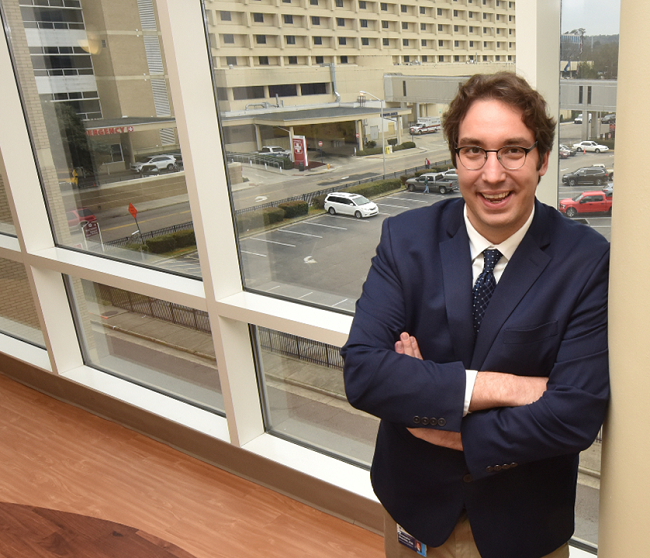
Christopher Drescher, PhD
Professor, Psychiatry & Health Behavior, MCG
Director, Psychology Internship Training